 AuthorPing
Reader guide
Why Is Harry Potter So Popular?
 By James Fleming, founder of AuthorPingPublished
Harry Potter is popular because it pairs a simple, powerful premise (an unloved child discovers he belongs to a hidden magical world) with a large, funny cast, and because the seven books grew darker and older as their readers did. Since the first book came out in 1997, the series has sold more than 600 million copies in 85 languages, which makes it the best-selling book series in history [1]. The final novel came out in 2007, and no new Harry Potter novel has been announced since [3].
That's the short answer. The longer one is more interesting, because the series didn't start out as a phenomenon. Its US first printing was just 50,000 copies [3].
Why did Harry Potter become so popular?
The explanations that come up again and again, from scholars, publishers and Rowling herself, fall into a few groups:
- A premise that links the magical world to the ordinary one
- Characters, humour and moral questions that hold up for adults as well as children
- A series that aged with its readers, book by book
- Release events that turned reading into something you queued for
- Films, a stage play and a wider franchise that kept bringing new readers in
Each one is backed by something concrete, so let's take them in turn.
What makes the Harry Potter premise so appealing?
The opening of Harry Potter and the Philosopher's Stone is about as relatable as a fantasy setup gets. Harry lives with his horrible aunt and uncle, sleeps in a cupboard under the stairs and hasn't had a birthday party in eleven years, until a letter arrives by owl.
Scholars Beach and Willner, summarised by JSTOR Daily, argue that the books' appeal lay in the seamless link Rowling drew between the magical world and the ordinary world young readers actually live in [6]. Hogwarts has lessons, exams, sports and unfair teachers. It's school, with dragons.
Rowling has described the idea in similar terms. She said she liked the idea of a child who escapes the confines of the adult world and goes somewhere he has power, "literally and metaphorically" [6]. That's a wish most children have had, and a fair few adults stuck in meetings too.
Is it the characters?
Largely, yes. The same scholars credit the success to Rowling's evocative writing, her rich cast of supporting characters, and her humour and moral questions that blurred good and evil [6].
You can see that cast building in the blurbs alone. Harry Potter and the Chamber of Secrets brings in Dobby, Gilderoy Lockhart and Moaning Myrtle. Harry Potter and the Prisoner of Azkaban hangs its whole plot on Sirius Black, a man everyone believes is a murderer, and on the possibility of a traitor close to Harry. A series where you can't be sure who's on which side is one where readers argue, and arguing is what keeps a fandom going between books.
Did Harry Potter grow up with its readers?
This is one of the strongest structural reasons, and it's built into the books. Harry is eleven at the start. By Harry Potter and the Goblet of Fire he's a fourteen-year-old who just wants to be normal, and by Harry Potter and the Half-Blood Prince the blurb talks about a war going badly, losses already suffered, and teenagers who "flirt and fight and fall in love".
So a child who started the series at the same age as Harry got books that roughly kept pace with them. Each volume also got bigger in ambition: an international tournament in book four, a government that can't be trusted in Harry Potter and the Order of the Phoenix, and the full history of Voldemort in book six.
The scholars' point about moral questions matters here [6]. A story that starts with a cartoonishly mean family and ends with blurred lines between good and evil gives readers something new to chew on at fifteen that they didn't need at ten.
Why were the release days such a big deal?
Because the demand grew at a rate publishing had never seen. Compare the US print runs reported by Scholastic:
- Harry Potter and the Philosopher's Stone, published in the US in 1998 under its American title: a 50,000-copy first printing [3]
- Harry Potter and the Prisoner of Azkaban, 1999: an initial print run of 500,000 [4]
- Harry Potter and the Goblet of Fire, 2000: an initial print run of 3.8 million, and 3 million copies sold in its first weekend [4]
That's a 76-fold jump in first printings across three books. By the end, Harry Potter and the Deathly Hallows sold 8.3 million copies in the US in its first 24 hours, breaking every record the earlier books had set [3].
The scholars describe children who hadn't previously read for pleasure queuing at bookstores and libraries for the next book, while adults placed advance orders online [6]. For anyone who has refreshed a Goodreads page waiting for news of a sequel, the idea of a whole country doing it at once is oddly comforting.
Every Harry Potter book has been a number 1 New York Times and USA Today bestseller [4]. Scholastic puts US sales at 230 million copies [3].
Did critics like Harry Potter?
Mostly, though not unanimously. The first three books all won awards, including the Nestlé Smarties Book Prize, received mostly positive reviews and became best sellers [2]. Harry Potter and the Prisoner of Azkaban was nominated for the Whitbread Award but didn't win, and in 2000 Rowling was named author of the year at the British Book Awards [2].
At the same time, JSTOR Daily notes that some critics initially wrote the books off as unimaginative and derivative [6]. That didn't seem to trouble the people queuing outside bookshops.
How much did the films and spin-offs help?
A great deal, by keeping the story in front of new audiences. Six further best-selling books and eight blockbuster films followed the first novel, and Harry's story as a grown-up continued in a stage play written with Jack Thorne and John Tiffany, published as a script book [1].
Screen Rant describes a wider Wizarding World that now stretches across books, box office, merchandise, theme parks and more [5]. Even the audiobooks have been listened to for over one billion hours [3].
The reading that fits best with all this is that the films amplified a popularity the books had already earned. The record first-weekend sales of Harry Potter and the Goblet of Fire came in 2000 [4], before the film era had really got going.
How many people are still reading Harry Potter?
Our reader counts come from Hardcover, a reading site that's much smaller than Goodreads or StoryGraph, which is why the numbers below are in the thousands rather than the millions. They're still useful for comparing books with each other.
- Harry Potter and the Philosopher's Stone is the best-read book in the series, with 16,251 readers on Hardcover.
- Across all seven novels there are 86,673 Hardcover shelvings (one reader can count more than once).
- Harry Potter and the Chamber of Secrets has 12,694, about 78% of the first book's figure.
- Harry Potter and the Deathly Hallows has 11,081, about 68% of the first book's figure, and slightly more than Harry Potter and the Half-Blood Prince at 11,055.
That last point says a lot. Most long series lose readers steadily from book one, but Harry Potter's biggest drop is between books one and two, after which the numbers barely fall at all. The gap from book five to book seven is under 250 readers. People who get past the first book tend to finish.
It's also still growing. By AuthorPing's own daily count, Harry Potter and the Philosopher's Stone has been gaining about 303 Hardcover readers a week (around 2% a week), measured over 24 days. Not bad for a book that came out in 1997 [1].
Where should I start reading Harry Potter?
Start with Harry Potter and the Philosopher's Stone and read the novels in publication order. Each book covers one school year and the plot builds directly from one to the next, so skipping ahead will spoil things you'd rather find out properly. The full Harry Potter reading order is on our series page, with every book listed in order.
Will there be more Harry Potter books?
No new main novel has been announced. Scholastic describes the series as having concluded in 2007 with Harry Potter and the Deathly Hallows [3]. Harry's adult life was continued on stage rather than in a novel, in the play published as a script book [1].
The next big thing is on screen instead. HBO is adapting the novels for television, and Screen Rant, citing a report in The Times, says the show could exceed the budgets of the Warner Bros. films [5]. If the films are anything to go by, that should send a fresh wave of readers back to the first book.
If Rowling or the series ever does announce something new, AuthorPing will let you know and show a countdown to the release. It's free on iPhone and Android, and saves you finding out from a stranger on a train.
About J.K. Rowling
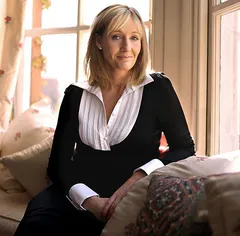
Joanne Rowling was born on 31st July 1965 at Yate General Hospital near Bristol, and grew up in Gloucestershire in England and in Chepstow, Gwent, in south-east Wales. Every Harry Potter release date
Questions readers ask
Why is Harry Potter so popular?
It combines a relatable premise, an unloved boy who finds he belongs in a hidden magical world, with a large cast, humour and moral questions that suit adults as well as children. The books also grew older and darker as their readers did, and the films kept bringing new readers in.
How many Harry Potter books are there?
There are seven main novels, starting with Harry Potter and the Philosopher's Stone and ending with Harry Potter and the Deathly Hallows. Harry's story as an adult continued in a stage play published as a script book.
Is Harry Potter the best-selling book series ever?
Yes. The series has sold more than 600 million copies worldwide in 85 languages, making it the best-selling book series in history.
What order should I read Harry Potter in?
Read the seven novels in publication order, beginning with Harry Potter and the Philosopher's Stone. The full Harry Potter reading order is on our series page.
Will there be a new Harry Potter book?
No new main Harry Potter novel has been announced, and the series concluded with Harry Potter and the Deathly Hallows. The next new Harry Potter story is HBO's television adaptation of the novels.
Sources
- J.K. Rowling’s Harry Potter™ Archives - J.K. Rowling
- Harry Potter books become a Best-selling children’s fantasy series
- Scholastic Marks 25 Year Anniversary of The Publication Of J.K. Rowling’s Harry Potter and the Sorcerer’s Stone
- Harry Potter Highlights and Milestones
- Harry Potter Season 1's Budget Reportedly Surpasses Warner Bros.' Most-Expensive Adaptation
- the enduring popularity of harry potter
James is the founder of AuthorPing. He's a lifelong reader and writer, and his goal is to help millions of readers around the world keep up with their favourite authors and series. More about AuthorPing